
Ragdoll Cat Dental Care: Complete Guide to Protecting Your Cat’s Teeth, Gums and Long-Term Health
Quick Answer
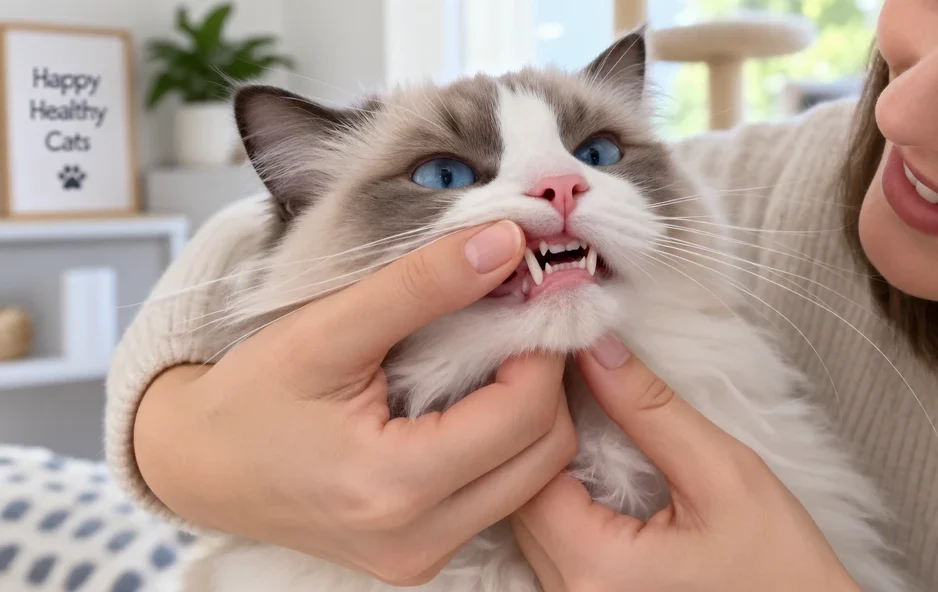
Ragdoll cat dental care is not optional grooming — it is a direct health management practice with implications for cardiac and kidney health in a breed already predisposed to both. The majority of domestic cats develop signs of periodontal disease by three years of age according to the American Veterinary Medical Association, and Ragdolls are no exception. The most effective dental care combines annual professional cleaning under anesthesia with consistent home care — the best being daily tooth brushing with an enzymatic cat-specific toothpaste, supplemented by dental water additives or food powders for cats who resist brushing.
At a Glance: Ragdoll Dental Care Overview
| Practice | Frequency | Impact Level | Difficulty |
|---|---|---|---|
| Professional dental cleaning | Annually (adult) | Highest | Vet procedure |
| Tooth brushing | Daily | High | Moderate — build gradually |
| Dental water additive | Daily — add to water bowl | Moderate | Very easy |
| Dental food powder | Daily — add to food | Moderate | Very easy |
| Dental treats or chews | 2 to 3 times weekly | Mild supplementary | Easy |
| Home mouth inspection | Weekly | Monitoring | Easy once habituated |
Why Dental Health Matters More for Ragdolls Than Most Breeds

Every veterinary conversation about dental disease in cats includes the phrase “it affects more than just the teeth” — but for Ragdoll owners, this connection is not simply a general health statement. It is directly relevant to the breed’s two most significant genetic health risks.
Hypertrophic cardiomyopathy (HCM) — the most serious genetic health concern in the Ragdoll breed — is a condition of the heart muscle. Chronic periodontal disease creates a persistent low-grade bacteraemia: bacteria from infected gum tissue periodically enter the bloodstream. Research on the relationship between oral bacteria and cardiovascular health in cats parallels decades of equivalent human medicine research, and the American Veterinary Medical Association has published guidance acknowledging the systemic inflammation and direct bacterial seeding that periodontal disease generates. For a cat whose cardiac tissue is already potentially vulnerable due to breed-specific HCM predisposition, eliminating the chronic inflammatory load of untreated dental disease is not a coincidental benefit — it is a targeted health decision.
The kidney connection is equally direct. Ragdolls carry polycystic kidney disease risk in some lines, and aging Ragdolls are subject to the same chronic kidney disease progression that affects senior cats of all breeds. The kidneys are among the organs most affected by the chronic bacteraemia that periodontal disease sustains. Supporting kidney health through good dental management is one of the clearest cross-system health investments available to Ragdoll owners.
I have written extensively about HCM and PKD at ragdollinfo.com — the HCM in Ragdoll cats guide and the PKD in Ragdoll cats guide cover those conditions in the depth they deserve. Dental care is where these health risks intersect with something owners can actively manage at home every single day.
For owners who want a structured, comprehensive approach to Ragdoll health management — including dental monitoring as part of a complete life-stage health tracking system — The Ragdoll Health and Longevity Handbook provides the tools and framework, available as a one-time digital PDF download for $11.90.
Understanding Feline Dental Disease: What Is Actually Happening

Dental disease in cats follows a predictable progression from healthy to severely affected, and understanding each stage helps owners recognize what they are looking at when inspecting their Ragdoll’s mouth.
Stage 0 — Healthy: Teeth are white to slightly off-white. Gum tissue is pink, firm, and sits snugly against the tooth base. No visible tartar, no redness, no swelling. The breath has a mild, neutral odor — not unpleasant.
Stage 1 — Early Gingivitis: A thin line of redness appears along the gumline where gum meets tooth. Plaque is present but tartar accumulation is minimal. This stage is fully reversible with professional cleaning followed by consistent home care. No tooth or bone damage has occurred.
Stage 2 — Early Periodontitis: Tartar is visibly present — yellow to brown deposits coating the tooth surface near the gumline. The gum tissue is more substantially inflamed and may begin to recede slightly. Breath odor increases noticeably. Some early attachment loss beginning between the tooth root and surrounding bone.
Stage 3 — Moderate Periodontitis: Significant tartar accumulation. Gum recession visible — the tooth roots may begin to show. Pockets forming between teeth and gum tissue trap bacteria. Halitosis (severe bad breath) is marked. Some cats begin to show signs of oral discomfort — eating more carefully, dropping food, reduced appetite for hard food.
Stage 4 — Advanced Periodontitis: Extensive bone loss. Teeth may be loose. Tooth root exposure. Abscesses possible. Significant pain, though cats continue masking discomfort through behavioral adaptation. Extraction of multiple teeth typically required at this stage.
The clinical reality is that most cats are not presented to veterinarians for dental assessment until Stage 2 or Stage 3, because owners either do not notice the early signs or interpret reduced appetite as a different problem. A Ragdoll’s calm temperament means they are even less likely than reactive breeds to signal dental pain overtly — they adapt and manage quietly, which is why owner monitoring and annual professional assessment are the only reliable way to catch dental disease early.
🐱 Get Your Free Ragdoll Cat Guide
Enter your email below and we’ll unlock the download link instantly.
Signs of Dental Problems in Ragdoll Cats
Knowing what to look for during weekly home mouth inspections allows earlier detection than relying on veterinary annual appointments alone.
Early signs (often missed): Slight redness along the gumline. Thin yellow line of tartar beginning to form at the tooth base, particularly visible on the upper back premolars and molars. Breath that has shifted from neutral to mildly unpleasant. Slightly increased drooling.
Moderate signs (often prompting veterinary attention): Clearly visible brown or yellow tartar deposits on tooth surfaces. Red, swollen gum tissue. Persistent bad breath distinctly noticeable during normal interaction. Cat eating more carefully, preferring soft food, or dropping hard kibble. Occasional pawing at the mouth.
Advanced signs (requiring urgent veterinary attention): Very strong, unpleasant oral odor. Significant gum recession with visible tooth roots. Difficulty eating, reduced food intake, weight loss. Bloody saliva. Visible loose teeth. Facial swelling below the eye (a sign of tooth root abscess).
Any Ragdoll showing moderate or advanced signs needs veterinary dental assessment rather than home management. Delaying professional treatment at this stage does not prevent disease progression — it accelerates it.
Professional Dental Cleaning: What to Expect
Annual professional dental cleaning under general anesthesia is the gold standard of feline dental care for adult cats and is the most impactful single dental intervention available. There is no safe, effective alternative to professional cleaning for removing established tartar and assessing the health of the teeth, gums, and supporting bone.
The anesthesia requirement is the aspect that gives some owners pause — and it is a legitimate consideration, particularly for Ragdolls whose HCM risk makes pre-anesthetic cardiac assessment important. The appropriate response is not to avoid dental cleaning but to ensure that a pre-anesthetic examination including a cardiac evaluation is completed before every procedure. Discuss the anesthetic risk management approach with your veterinarian before scheduling — a veterinarian experienced with Ragdolls will understand this requirement.
A professional dental cleaning typically involves: pre-anesthetic blood work to assess organ function, anesthetic induction and monitoring by trained staff, full-mouth dental radiography to assess the health of tooth roots and bone below the gumline (visible radiographic disease frequently goes undetected by visual examination alone), scaling of all tooth surfaces above and below the gumline using ultrasonic scalers, assessment of each tooth for mobility, fracture, and pocket depth, extraction of non-salvageable teeth, and polishing of all retained teeth to smooth the surface and reduce plaque adherence.
The frequency of professional cleaning depends on the individual cat’s susceptibility and the quality of home care between appointments. Once annually is the minimum standard for adult cats. Cats with rapid tartar accumulation or known dental disease history may benefit from every six to nine months.
Home Dental Care: Daily Practices That Work

Tooth Brushing — The Most Effective Home Practice
Daily tooth brushing with an enzymatic cat-specific toothpaste provides the most direct and most effective plaque removal available outside of professional cleaning. The enzymatic action of the toothpaste continues to work after brushing is finished, breaking down plaque chemically even in areas the brush did not directly reach.
Important: Never use human toothpaste on cats. Human toothpaste contains fluoride and often xylitol, both of which are toxic to cats. Use only toothpaste formulated and labeled specifically for cats.
Building the brushing habit gradually:
Week 1: Let your Ragdoll lick a small amount of cat toothpaste from your finger daily. The goal is positive association with the taste and smell of the product.
Week 2: Apply toothpaste to your fingertip and gently rub the outer surfaces of the front teeth. Keep sessions to 15 to 20 seconds. Reward with a treat afterward.
Week 3: Introduce a small finger brush or soft-bristled cat toothbrush. Continue with the front teeth, extending slowly toward the back teeth as the cat becomes comfortable.
Week 4 onward: Progress to covering all accessible outer surfaces in a gentle circular motion. Daily sessions of 30 to 60 seconds are the practical realistic target.
Most Ragdolls adapt to tooth brushing within three to four weeks when the introduction is gradual, consistent, and always followed by a positive reinforcement reward. Starting during kittenhood produces the most reliable adult tolerance, but adult cats can be habituated with patience.
Dental Water Additives — Easy Daily Support
For cats who resist tooth brushing or as a supplement to it, dental water additives mixed directly into the water bowl provide enzymatic and antibacterial oral support without any handling of the cat’s mouth.
The Oxyfresh Premium Pet Dental Care Water Additive is tasteless and odorless — it does not alter the water in ways that would cause a cat to drink less, which is a meaningful concern given the importance of hydration for Ragdolls with any kidney health risk. It reduces oral bacterial load and plaque accumulation through continuous enzymatic action throughout the day.
The additive works most effectively when combined with a water fountain that encourages consistent drinking — Ragdolls who drink more frequently cycle the additive through the oral cavity more regularly. The Petcube Cam mounted near the water fountain also allows monitoring whether your Ragdoll is drinking normally — behavioral changes including reduced water intake can signal oral discomfort before other symptoms appear.
Dental Food Powder — A Food-Based Alternative
The Vetriuntrix Cat Dental Care Powder is a natural, vet-formulated powder added to wet or dry food once daily that supports gum health and reduces tartar through enzymatic activity in the oral cavity after eating. It provides a food-based alternative for cats who will not tolerate either brushing or water additive alterations, and can be used alongside either for enhanced effect.
Dental Care for Kittens vs Adult vs Senior Ragdolls
Kittens (birth to 12 months): Begin habituating to tooth brushing as early as possible — ideally from 8 to 10 weeks. Use a very soft finger brush or simply a gauze-wrapped finger at first. The permanent teeth erupt between 11 and 24 weeks, replacing the kitten deciduous teeth. Occasional retained deciduous teeth alongside erupting permanent teeth may require veterinary extraction. First professional dental assessment should occur during the 12-month comprehensive veterinary examination.
Adults (1 to 8 years): Annual professional cleaning is the standard. Daily home brushing supplemented by water additive or food powder provides the between-cleaning support. Monthly home mouth inspection allows early detection of any changes between professional appointments.
Seniors (8 years and older): Dental disease risk increases with age, and senior Ragdolls often require more frequent professional cleaning — sometimes every six to nine months. Pre-anesthetic cardiac assessment is particularly important in this age group given HCM risk. Oral pain from dental disease in senior cats can be mistaken for general age-related decline — if a senior Ragdoll shows reduced appetite or behavioral change, oral examination is a necessary part of the assessment.
The Air Quality Connection: Cat Dander, Dental Health, and Indoor Environment
For Ragdoll owners managing multiple aspects of household health simultaneously, an air purifier addresses a separate but complementary environmental concern: airborne allergens, dander, and the pet-specific particulate matter that accumulates in homes with semi-long coated cats.
The Meowant MW-PA16 Pet Air Purifier provides HEPA filtration designed specifically for pet households, reducing airborne dander, floating hair, and the particulate matter associated with litter use — all concerns for Ragdoll owners. The washable pre-filter reduces ongoing maintenance costs, and the unit is certified by CARB, SGS, FCC, and EPA.
For households where odor control alongside dander management is a priority — particularly relevant for multi-cat Ragdoll homes — the Meowant MW-PA08 Pet Air Purifier adds a 360-degree I-shaped large-diameter air intake that captures floating cat hair at floor level alongside four-stage H13 HEPA filtration.
How We Researched This Article
Dental disease staging and treatment information in this article reflects the American Veterinary Dental College’s published staging criteria for feline periodontal disease, AVMA guidance on the systemic implications of feline oral disease, Cornell Feline Health Center published guidance on dental care in cats, and published veterinary internal medicine references on the relationship between periodontal bacteraemia and systemic organ health. Product recommendations reflect evidence-based dental support categories rather than speculative benefit claims.
What We Have Covered
This complete guide to Ragdoll dental care covered why dental health is specifically more consequential for this breed due to HCM and kidney disease connections, the four stages of feline periodontal disease from healthy to advanced, the signs of dental problems that owners can detect during home mouth inspections, what professional dental cleaning under anesthesia involves and why pre-anesthetic cardiac assessment matters for Ragdolls, the daily home dental care practices — tooth brushing technique, water additives, and food powders — with evidence-based commentary on what each achieves, dental care considerations across kitten, adult, and senior life stages, and practical product recommendations across each approach. For the cardiac and kidney health context that makes dental care so important in this breed, the HCM in Ragdoll cats guide and PKD in Ragdoll cats guide provide the complete picture. For more information, contact us now.
Frequently Asked Questions
How often should a Ragdoll cat have their teeth cleaned professionally?
Once annually is the minimum standard for adult Ragdolls receiving consistent home dental care. Cats with faster tartar accumulation or known dental disease may benefit from every six to nine months. Kittens should have their first dental assessment at their 12-month comprehensive veterinary examination.
Can I use human toothpaste on my Ragdoll?
Never. Human toothpaste contains fluoride and often xylitol, both of which are toxic to cats. Use only toothpaste formulated and labeled specifically for cats. Enzymatic cat toothpastes in cat-appropriate flavors like chicken or fish are available from pet supply retailers and veterinary practices.
Do dental water additives actually work for cats?
Yes, as a supplement to brushing rather than a replacement for it. Tasteless, odorless dental water additives reduce oral bacterial load and plaque accumulation through enzymatic action. They are most effective when the cat drinks consistently — which is further encouraged by a running water fountain. They cannot remove established tartar, which requires professional cleaning.
Is anesthesia safe for Ragdolls during dental cleaning?
With appropriate pre-anesthetic assessment including a cardiac evaluation, anesthesia for dental procedures is manageable for the vast majority of Ragdolls. The pre-anesthetic cardiac evaluation is particularly important for this breed given HCM predisposition. Discuss the anesthetic protocol and cardiac screening with your veterinarian before every dental cleaning procedure.
How do I know if my Ragdoll has dental pain?
Ragdolls mask dental pain effectively and may not show obvious distress. Signs to look for include eating more carefully or preferring soft food, dropping hard kibble, reduced food intake, pawing at the mouth, increased drooling, a change in the quality of their breath, and in advanced cases visible swelling below the eye. Annual veterinary dental assessment catches disease that behavioral observation alone misses.

Hi, I’m Mark Allen. I specialize in researching and writing about Ragdoll cats, covering topics such as behavior, grooming, nutrition, health, and breed characteristics. My goal is to provide cat owners with practical, well-researched information that helps them make informed decisions and better care for their pets.

