
Last Updated on September 17, 2026 by Mark Allen
Ragdoll Cat Price Guide: How Much Do They Cost in 2026?
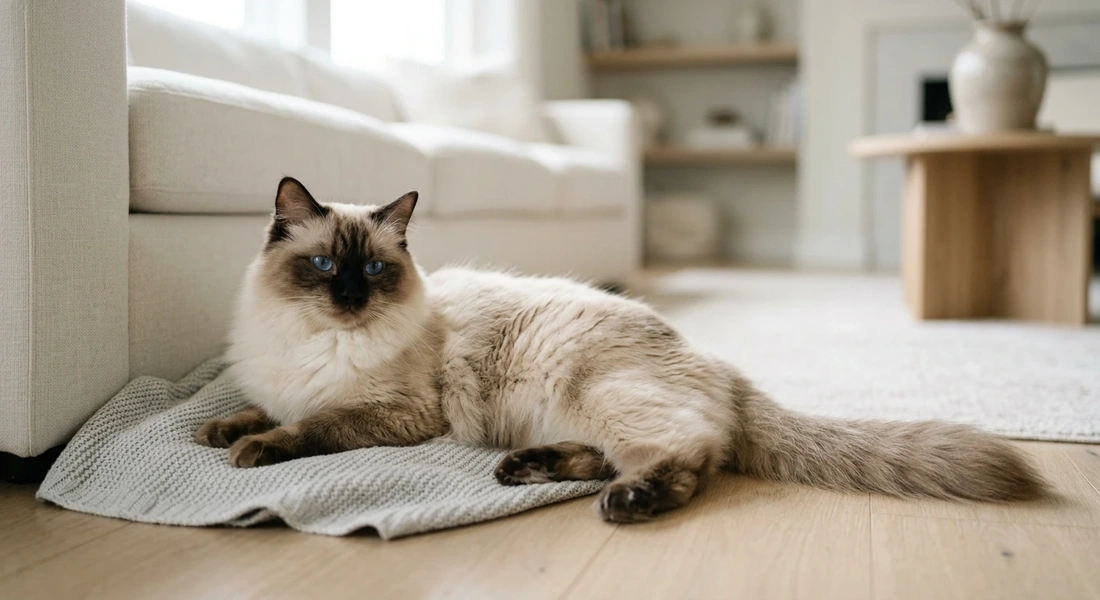
Ragdoll cat prices range from $75 to $6,000+ — and once you see the five tiers, the gap makes sense. Here’s how to spot a fair price (and a scam).
Search “how much does a Ragdoll cat cost,” and you’ll get an answer so wide it looks like nobody agrees: $75 to $6,000+. Nobody’s wrong — they’re pricing different things.
At the lower end, you can encounter two very different situations. A rescue Ragdoll may have an adoption fee around $75–$300 and may already be spayed or neutered, vaccinated, and accompanied by available health records. An unregistered seller may advertise a Ragdoll for roughly $200–$800 without verifiable pedigree documentation or the same level of health information. The prices can overlap, but what you receive in documentation, health information, and breeder or rescue support can be very different.
A TICA-registered kitten from a reputable Ragdoll breeder lands at the other end — pet-quality typically $1,000–$3,000, with show or breeding-quality cattery kittens running $3,000–$5,500+. Same word, different product.
That’s the real story behind Ragdoll cat prices in the USA for 2026: it’s not inconsistent data, it’s tiers. Once you know which tier you’re shopping, the number stops feeling random — and the rest of this guide breaks down exactly what you’re paying for at each one.
The Five Ways People Actually Get a Ragdoll
Forget kitten-vs-adult. That’s not where the real Ragdoll kitten cost breeder math splits — the split is by tier, and there are five:
- Rescue/shelter — cheapest, usually adult, roughly $75–$300, typically already spayed/neutered with health records in hand
- Retired breeding adult — often $200–$800, already altered, already socialized, and the tier almost nobody talks about
- Pet-quality kitten, registered breeder — $1,000–$3,000
- Show-quality or breeding-rights kitten — $3,000–$5,500+
- Backyard/unregistered “Ragdoll” — $200–$800, cheap for a reason: no fixed status, no health testing, no verified pedigree, and the seller rarely calls themselves a breeder
Here’s the catch on kitten vs. adult Ragdoll cost: a retired breeding adult can cost the same as an unregistered kitten while coming with an actual health and temperament track record. Two listings at $400 can be opposite risks — one’s a vetted, altered adult with paperwork, the other’s an unproven kitten with none. The cheapest way to get a Ragdoll isn’t always the riskiest one.
Is a $200 Ragdoll Kitten Real? How to Tell a Legitimate Deal From a Scam

$200 alone tells you nothing. It’s a legitimate adoption fee at a rescue — and a near-impossible price for a registered, health-tested breeder kitten. Fees in that range are common at breed-specific rescues and general shelters; check a Ragdoll rescue directory or your local shelter’s current listings to see real, dated examples near you. What matters isn’t the number — it’s that it’s coming from a rescue platform, not someone claiming to be a breeder.
The scam signal isn’t price. It’s price plus breeder claims plus missing paperwork: no TICA/CFA registration number, refusal to do a video call or in-person visit, payment demanded only via wire transfer or gift cards.
Before any deposit:
- Ask for the registration number directly
- Request a live video call of the kitten with its mother
- Reverse-image-search the listing photos
- Get the vet’s contact info and call to confirm records
A “breeder” who dodges these isn’t protecting privacy — they’re avoiding verification.
How to Identify a Real Ragdoll Cat (Before You Pay For One)

Start with the eyes. Breed standards from TICA and CFA call for deep blue eyes on a purebred Ragdoll — a genuine, defining trait, since Ragdolls are always a pointed pattern and the point gene is what produces that blue. Treat it as a strong indicator, not a checkbox, though: a kitten’s eye color isn’t fully set until several months of age, and shade can vary a bit even within the standard. Gold or green eyes on an otherwise Ragdoll-looking adult cat points toward a mix, not the breed itself.
Everything else you’ve probably heard about how to identify a Ragdoll cat is a clue, not a confirmation:
- Size — males typically 12–21 lbs, females 8–15 lbs
- Coat — semi-long, silky, single-layer
- Pattern — colorpoint, darker face/ears/legs/tail against a paler body
- The flop — that full-body go-limp when you pick them up
If you’re trying to identify a Ragdoll based on appearance, our Ragdoll color identification guide explains how coat color and pattern can help narrow down what you’re looking at, while also showing why appearance alone cannot establish pedigree.
The real confirmation of a purebred, registered Ragdoll is pedigree documentation — TICA, CFA, or GCCF papers covering both parents, plus an individual registration certificate for the kitten. A DNA test can confirm breed-associated genetic markers, but it isn’t a substitute for that paperwork and doesn’t by itself establish official pedigree or registration status. Asking “how do I know if my cat is a real Ragdoll” gets answered by paperwork, not by how blue those eyes look in good lighting. A legitimate breeder hands over those papers without a fight — if they hesitate, that’s your answer too.
What You’re Actually Paying For
A breeder’s price reflects a combination of expenses that a reputable breeding program takes on before a kitten is placed. Health testing, veterinary care, registration, vaccinations, microchipping, socialization, food, and other routine costs can all contribute to the final price. For a closer look at the factors behind breeder pricing, see the guide to why Ragdoll cats are so expensive.
Start with HCM genetic testing — the big one. Ragdolls carry a breed-specific MYBPC3 mutation (R820W) linked to hypertrophic cardiomyopathy, inherited as an autosomal dominant trait with incomplete penetrance. In practice: a cat with two copies (homozygous) is at high risk of developing the disease, per UC Davis’s own genetics lab — but “high risk” isn’t “guaranteed.” Some homozygous cats never show clinical signs, and even a single copy carries some increased risk. The DNA test tells you genetic risk, not a diagnosis. Confirming or ruling out HCM itself requires cardiac evaluation, typically including an echocardiogram interpreted by a veterinarian. For a more detailed explanation of the condition, genetic risk, screening, and what HCM means for Ragdoll owners, see our guide to HCM in Ragdoll cats.
The DNA test tells you genetic risk, not a diagnosis — confirming or ruling out HCM itself takes an echocardiogram read by a vet, not a cheek swab. I checked current UC Davis VGL pricing directly rather than trusting old notes: the test runs $47 per animal. Cheap once — but every breeding cat needs it, alongside PKD screening, and it repeats across generations of a program.
Add registration fees, pre-placement vaccines, deworming, microchipping, spay/neuter — all paid before a kitten’s ever listed. Then factor 12–16 weeks of socialization — a norm most reputable Ragdoll catteries follow — instead of the bare minimum 8. That’s why Ragdoll kittens from a breeder cost what they do: itemized care, not reputation tax.
Pet Quality vs. Show Quality
Ragdoll pet quality vs. show quality price confuses people because “pet quality” sounds like a downgrade. It isn’t. Two kittens can come from the same litter, same parents, same health testing — and still sell at different prices, because the split is about conformation, not condition.
Quality grading, judged against the TICA/CFA breed standard, scores things like eye shape, ear set, body proportions, and coat/color precision — traits that matter in a show ring and nowhere else. So what does pet quality mean for a Ragdoll? Usually something a judge would flag and you’d never notice: eyes a touch rounder than ideal, an ear set fractionally off, a coat pattern that’s slightly imperfect. None of it touches health. None of it touches personality.
Some sources report that HCM may be identified relatively early in Ragdolls, which is one reason health screening and discussions with a veterinarian can be important when planning long-term ownership. However, age of diagnosis varies, and an individual cat’s risk cannot be determined from breed alone. That price includes a contractual obligation to breed and show, not just a “better” cat.
Bottom line: a pet-quality Ragdoll isn’t the consolation prize. It’s the full cat, minus a flaw only a judge would ever see.
Does Coat Color Really Change the Price?

Some color premiums are real. Others are a label. Telling them apart comes down to one question: is the color genuinely scarce in the breeding population, or is it just being called rare?
Chocolate, lilac, flame, and mink carry a legitimate premium — fewer breeding cats in the registries actually carry those genes, so kittens in those colors are limited by supply, not by hype. That’s why lilac Ragdolls are expensive: the math is genetic, not promotional.
Seal point and blue point are the opposite story. They’re the most common Ragdoll colors — full stop. A listing that calls a seal-point or blue-point kitten “rare” or “exclusive” isn’t describing genetics. It’s a sales tactic.
Pattern matters too, and it is separate from color. Colorpoint Ragdolls have darker points without white markings, mitted Ragdolls have white paws and additional white markings, while bicolor Ragdolls have distinctive white areas including the characteristic inverted V on the face. If you want to compare the different Ragdoll colors and patterns in more detail, see our Ragdoll cat colors and patterns guide.
Ragdoll cat color prices should track genetics, not adjectives. When a seller leans on “rare,” ask what’s actually behind the gene pool — not what’s in the caption.
Male vs. Female Ragdolls
Size is the one sex-based difference that actually holds up: males run heavier, topping out around 21 lbs, against a noticeably lighter female frame. Consistent, measurable, done.
Personality is where things get shaky. Wander through cat blogs, and you’ll find the same confident split repeated everywhere — males as more outgoing or “needy,” females as more independent and even-keeled. It reads like settled fact. It isn’t. Longtime specialist and community-run sources are far more cautious here, landing on both sexes tending toward friendly, affectionate temperaments, with individual variation mattering more than which one they are.
So do male or female Ragdolls make better pets? Wrong question. Bloodline, how well a kitten was socialized early on, and spay/neuter status all predict temperament better than sex ever will — and all three vary within each sex, not just between them.
If you’ve ever met two cats of the same sex with completely opposite personalities, that’s not an exception to the rule. That’s the actual rule.
Why Location Changes the Number
Searching “Ragdoll cat price near me” and expecting a lower number because you’re close to where the breed started? That instinct gets it backwards.
Location moves price through one real mechanism: the cost of running a cattery where you live. Vet bills, property, overhead — catteries in high cost-of-living areas absorb higher costs, and that tends to push prices up, not down. Distance from breed history doesn’t factor in at all.
Which makes Ragdoll cat cost in California a genuinely interesting case. Ragdolls were developed in California in the 1960s by breeder Ann Baker — so the state has deep, established breeder density. But that’s an origin story, not a discount. Much of California carries a high cost of living, which works against lower prices, not for them.
How to Find (and Vet) a Reputable Breeder or Rescue Near You
Skip the open marketplace search. How to find a reputable Ragdoll breeder actually starts with the registries: TICA and CFA both run breeder-search tools, and a listed breeder is registered with the organization — not a guarantee, but a real filter that a random online listing doesn’t have.
Looking for Ragdoll rescue near me? Search for breed-specific Ragdoll rescues by name, not just your local general shelter. They specialize in the issues this breed actually carries — temperament and health traits general shelters aren’t necessarily screening for.
Once you’ve got a candidate, the vetting call needs concrete answers, not vibes:
- TICA/CFA registration numbers for both parents
- Proof of HCM/PKD genetic testing
- A live video call showing the kitten with its mother
- Vet contact info to confirm health records
That’s the same checklist from the $200-listing scam section — here, you’re using it proactively instead of reacting to a red flag. One thing worth naming: this list only works before money moves. Ask it during the call, not after the deposit.
The Cheapest Legitimate Paths to a Ragdoll
Cheap and risky get treated as synonyms. They shouldn’t be. Here are three genuinely legitimate ways to land a Ragdoll under breeder-kitten prices — each with a real tradeoff, not a hidden catch.
Adult rescue or shelter adoption — typically $75–$300, the same range as the legitimate rescue listings covered earlier. Lowest purchase cost, although the cat’s history and health background may be less complete than those of a well-documented breeder cat. The tradeoff: you’re adopting an adult with a history you only partly know, not a kitten.
Retired breeding cats — often $300–$800. Already altered, already health-tested, already socialized inside an active breeding program. This is the tier most buyers skip entirely because “cheap kitten” is the only cheap option they think to look for — which makes it genuinely underused.
Waitlist kittens with a minor cosmetic fault — priced below their showcase littermates for a flaw that’s purely conformational, nothing health-related. Real savings, zero health tradeoff. The cost is patience: you’re going through a registered breeder’s waitlist, not grabbing an instant listing.
Cheap Ragdoll kittens, legitimate and instant, don’t usually go together. Legitimate and patient often do.
What Should Be Included in the Price
What’s included in a Ragdoll kitten’s price isn’t a matter of trust — it’s a matter of paperwork. A reputable breeder’s price should bundle vaccinations, deworming, a vet exam, a microchip, often spay/neuter before pickup, registration papers, and a written health guarantee. Keyword: written. A verbal “yes, all done” isn’t the same thing as documentation in hand.
Does Ragdoll kitten price include vaccines? Usually the first round, yes. What it typically doesn’t cover:
- Transport, roughly $200–$800 depending on distance and method
- A second round of vaccine boosters if the kitten goes home very young and needs follow-up shots after pickup
And does the Ragdoll price include spay/neuter? Often, but confirm it — don’t assume.
Walk away if any of it doesn’t show up in writing — same gaps flagged in the $200-scam and vetting-call sections above, just later in the process: you’re checking now before you sign, not after something’s already gone wrong.
The Real First-Year Cost
The sticker price is the entry fee. What actually determines how much it costs to own a Ragdoll the first year is everything that comes after — and it lands hard, fast.
Most of it hits in month one. Litter box, carrier, bed, scratching post, bowls — the Ragdoll cat setup cost is a lump sum you pay once, and it drops off sharply after that first haul.
Food is where this breed quietly differs from a generic cat estimate. This breed runs larger than average — up to 21 lbs for males — so Ragdoll food cost for a large breed genuinely outpaces what a standard-size cat eats.This breed runs larger than average — with adult males often reaching substantially higher weights than females — so food costs can differ from those of a smaller cat. Our Ragdoll cat weight chart by age provides a more detailed look at how Ragdoll weight develops from kittenhood through adulthood. “Cats need food” doesn’t capture that; body size does.
Putting a number on it: Petful estimates $1,500–$2,400 in first-year setup and care beyond purchase price, and that figure is Ragdoll-specific. For comparison, ASPCA Pet Insurance publishes a lower total for cats generally — around $365 in one-time setup plus roughly $634 in first-year routine care, landing near $1,000 — but that’s an average-size-cat figure, not adjusted for a larger breed.
Since Ragdolls eat more and go through more litter, the Ragdoll-specific $1,500–$2,400 range is the more useful number to budget against. Ragdoll cat first-year cost isn’t one number — it’s the purchase price plus this.
What a Ragdoll Costs Every Month After Year One
Once the setup costs clear, Ragdoll cat monthly cost settles into a recurring core: roughly $90–$250/month for food, litter, routine vet care, and optional insurance. That’s my own estimate, not a cited Ragdoll-specific study — no public dataset like that appears to exist yet. I built it by stacking real cost categories, then adjusting upward for what a larger breed actually needs.
For comparison, ASPCA Pet Insurance publishes about $53/month (roughly $634/year) as its baseline for routine cat care — food, vet visits, treats, and basics for an average-size cat. That figure doesn’t include insurance, and it isn’t adjusted for a breed that eats and uses litter at Ragdoll-sized portions, which is why my estimate runs higher rather than conflicting with it.
That number also isn’t flat across a Ragdoll cat lifetime cost of 15–18 years:
- Kitten years front-load vaccines and altering
- Adult years are the flattest, most predictable stretch
- Senior years — roughly the last third — typically bring higher vet costs: routine bloodwork, dental work, monitoring for age-related issues and breed-specific risks like HCM
Multiply the core monthly figure across those stages, and you get a more realistic Ragdoll cat annual cost trajectory rather than a single flat “how much per month to own a Ragdoll” answer. For more information about the breed’s expected lifespan and how costs can change as a Ragdoll ages, see our guide to Ragdoll cat lifespan.
Is Pet Insurance Worth It for a Ragdoll?

Generic pet-insurance math doesn’t apply here. This breed’s early HCM risk changes the equation entirely.
Start with the baseline: NAPHIA’s latest published U.S. data puts the average accident-and-illness insurance premium for cats at about $32.21 per month, although individual premiums vary by insurer, location, age, coverage, and other factors.
What spikes the urgency is timing. Average age of HCM diagnosis in Ragdolls runs around 15 months — compare that to 5–7 years in cats generally. The risk window most insurance-shoppers plan around simply doesn’t apply to this breed; it opens far earlier.
And the DNA test isn’t the finish line. MYBPC3 testing screens genetic risk — it doesn’t replace echocardiogram monitoring, the actual diagnostic tool for detecting HCM, which is a separate, recurring, non-trivial cost regardless of test results.
Do Ragdolls need pet insurance? The math leans toward “worth strongly considering,” given how early that risk window opens — but any decision about testing, monitoring frequency, or what a specific echocardiogram will cost belongs in a conversation with your vet, not a blog post; costs and recommended monitoring intervals vary by clinic, region, and your cat’s individual risk profile.
Want a More Complete Ragdoll Health Resource?
The cost of owning a Ragdoll is not limited to the purchase price. Health screening, veterinary care, insurance, and long-term monitoring can also become important parts of responsible ownership.
Our Ragdoll Health & Longevity Handbook — 2026 Edition covers HCM and PKD, health screening, cardiac evaluations, veterinary planning, health records, and practical ways to stay organized throughout your cat’s life.
What a Ragdoll’s Price Is Actually Buying You
Ragdolls sit in the same general price bracket as other popular “luxury” breeds — Maine Coon, Persian, British Shorthair, Bengal — and chasing which one costs less misses the more useful question.
The better one: what does that price actually buy you?
For a Ragdoll, the answer is specific — For a Ragdoll, part of the price may reflect breed-relevant health testing, including screening for the MYBPC3 R820W variant associated with HCM and, where appropriate, testing for other inherited conditions such as PKD. What is included varies by breeder, so buyers should ask for the actual health-testing records rather than assuming they are included. That’s not marketing. That’s a documented health-testing cost you can verify.
Can You Actually Afford a Ragdoll?
Is a Ragdoll cat worth the price? Not a verdict this guide can hand you. It’s a calculation you run yourself, using numbers already sitting in this piece.
Here’s the actual math:
- Your tier’s purchase price (rescue, retired adult, pet-quality, or show-quality — whichever you landed on)
- $1,500–$2,400 in first-year setup and care (Petful’s Ragdoll-specific estimate)
- $90–$250/month ongoing after that (my own reasoned estimate, adjusted for the breed’s size)
Add it up before you decide anything — not the sticker price alone.
Then run the questions a spreadsheet can’t answer for you: do you actually have time for regular grooming and that early socialization stretch if you’re bringing home a young kitten? Does another pet at home change how this goes? Are you prepared to provide a safe indoor environment and carefully manage any outdoor access?
Can I afford a Ragdoll right now, this month? If the upfront number is a stretch, “wait and save” beats “buy the cheapest one you can find.” Retired breeding adults and rescue adoption aren’t a consolation prize at that point — they’re the legitimate answer.
Should I get a Ragdoll cat? Run the numbers above first. The answer that comes out the other side is the right one — even if it’s “not yet.”
How We Researched This Article
To make this Ragdoll cat price guide as accurate and useful as possible, we researched pricing, ownership costs, breed standards, health considerations, insurance, and breeder verification using a combination of veterinary, registry, industry, and established pet-care sources. Price ranges were cross-checked against published Ragdoll pricing guides, including Petful, Floppycats, FelineNest, Wiseacres, and Ragmeister, while breed characteristics and registration information were checked against official resources from The International Cat Association (TICA) and The Cat Fanciers’ Association (CFA). For health-related information, we relied on the UC Davis Veterinary Genetics Laboratory, the original published research on the Ragdoll-specific MYBPC3 R820W mutation, and veterinary sources including Cornell University College of Veterinary Medicine. First-year ownership and insurance costs were compared with figures from Petful, Daily Paws, ASPCA Pet Insurance, and industry data from NAPHIA. We also cross-checked information about HCM and age-related diagnosis against additional veterinary and genetic testing sources where appropriate. Because Ragdoll prices vary significantly by country, breeder, pedigree, age, quality, and what is included in the purchase, the figures in this guide should be treated as research-based ranges rather than fixed prices. Our goal is to give readers enough reliable information to understand what they are paying for, identify important questions to ask a breeder or rescue organization, and evaluate a Ragdoll listing based on documentation, health information, and overall transparency rather than price alone.
What We Covered
In this guide, we explored how much Ragdoll cats can cost in 2026 and why there is such a wide difference between prices. We looked at rescue and shelter adoption, retired breeding cats, registered breeder kittens, show and breeding-quality cats, and lower-priced unregistered listings. We also covered the factors that influence a Ragdoll’s price, including pedigree, health testing, age, location, color and pattern, breeder reputation, and whether breeding rights are included.
We also looked beyond the purchase price to consider first-year expenses and ongoing costs, including insurance, veterinary care, transportation, grooming, food, litter, and other expenses. Understanding these costs can help you plan for the financial responsibility of owning a Ragdoll rather than focusing only on the initial price.
Most importantly, the asking price should never be the only thing you evaluate. Before buying, verify the available documentation, ask questions about the kitten’s parents and health history, and communicate directly with the breeder or rescue organization. A lower price does not automatically make a listing bad, just as a higher price does not automatically guarantee quality.
If you have a question about Ragdoll cats, their price, health, care, or anything else covered on RagdollInfo, you can contact us through our Contact page. We are always interested in hearing from Ragdoll owners and readers.
Have a question about Ragdoll cats? Visit our Contact page to get in touch.
Ragdoll Cat Price FAQs
How much is a Ragdoll cat without papers?
A Ragdoll sold without pedigree papers may fall into a lower price range, often around $200 to $800, but the asking price alone cannot confirm that the cat is a purebred Ragdoll. Without verifiable pedigree documentation, you cannot establish official registration or pedigree status from appearance alone. A DNA test may provide useful genetic information, but it does not replace pedigree papers or establish official registration by itself.
Ragdoll breeder vs. pet store price: Does it matter?
Yes. Buying directly from a reputable registered breeder can give you access to pedigree documentation, information about the kitten’s parents, health records, and details about relevant health testing. With a pet store, that direct relationship with the breeder may be less transparent. Rather than focusing only on the price difference, look at what documentation, health information, and breeder support are included with the purchase.
Is $400 too cheap for a Ragdoll kitten?
$400 is considerably below the typical $1,000 to $3,000 range discussed in this guide for a registered pet-quality breeder kitten, although prices vary by location and circumstances. A low price does not automatically mean a scam, but it is a reason to verify the listing carefully. Ask for pedigree documentation where applicable, health records, information about the parents, and a live video call showing the kitten and its environment. The price itself cannot establish whether the seller or kitten is legitimate.
What does Ragdoll cat insurance cost?
Insurance prices vary based on factors such as the cat’s age, location, coverage level, deductible, reimbursement percentage, and insurer. NAPHIA’s industry data provides average cat insurance figures, but these are not specific to Ragdolls. There is not enough breed-specific data to say that every Ragdoll will cost more to insure simply because of its breed. Comparing several policies is the best way to understand the actual cost for an individual cat.
How much does Ragdoll cat shipping cost?
Shipping a Ragdoll can commonly add around $200 to $800 to the overall purchase cost, depending on the distance, transportation method, and other arrangements. This expense is often separate from the kitten’s purchase price, so ask the breeder for a complete cost breakdown before making a commitment.

Hi, I’m Mark Allen. I specialize in researching and writing about Ragdoll cats, covering topics such as behavior, grooming, nutrition, health, and breed characteristics. My goal is to provide cat owners with practical, well-researched information that helps them make informed decisions and better care for their pets.

